 Contact us
Contact us
Contact us
RTP is one of the key levers for managing an online casino’s economy. In official slots, the Return to Player is hard-coded by the provider, but when you work with slot copies, the operator gets more flexibility: you can adjust RTP by strategy, traffic type and seasonality. In this article we look at which RTP ranges are relevant in 2025, how they affect revenue and retention, and how SoftIGaming helps you use this flexibility without losing player trust.

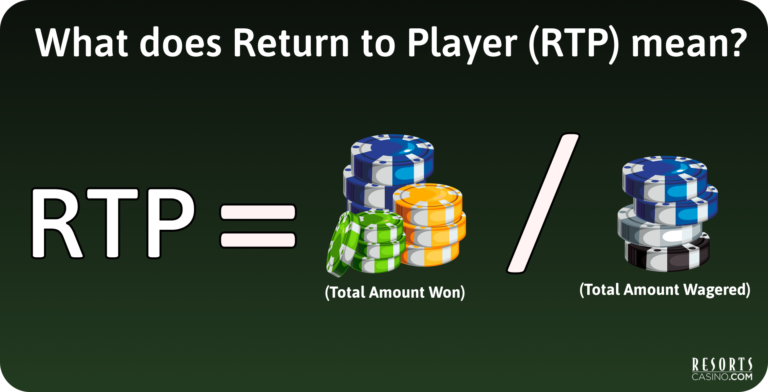
RTP (Return to Player) is the percentage of all stakes that a slot returns to players as winnings over the long run. It is not about a single session, but about a large volume of bets.
For certified providers, the RTP range is usually fixed and written in the certification: most often around 95–97%, sometimes with several predefined variants (for example 94%, 96%, 97%) that the operator chooses when integrating the game.
Slot copies work differently: the math is controlled on the developer/aggregator side, and the operator can configure RTP more flexibly.
With slot copies, it makes more sense to think in ranges for different business goals instead of one “magic” number:

The “right” RTP is not “the lower, the better for the casino”. It is about balancing short-term profit with player lifetime.

When you work with slot copies via SoftIGaming, you get not only the games themselves, but also flexible control over their math. RTP can be configured by hall, provider, promotion, or even brand.
The goal is not to “cut RTP just for margin”, but to build a configuration where the casino earns consistently while players keep playing and bringing others.
In 2025, RTP is no longer a purely technical parameter —
it is a full-scale tool for managing your project’s economy.
Official slots give you a fixed range (usually 94–97%),
while slot copies connected via SoftIGaming let you work flexibly:
from 90–95% for the core pool to 95–97% for promos and retention.
A well-structured RTP strategy on slot copies allows a casino
to keep its margin and still build long-term relationships with players.
SoftIGaming helps operators design this model — from choosing the right RTP ranges
to analytics and gradual optimisation based on real player behaviour.