
Contact

Casinos Without a License in 2026: What Actually Works and Why 70% Shut Down

In 2026, an “unlicensed casino” usually doesn’t die from one big hit. It dies from a chain of small failures: payment approvals start dropping, a key domain gets blocked, traffic becomes more expensive, promos burn your margin, and the team never identifies where the funnel is leaking. Below is a pragmatic breakdown of what actually works in these projects and what almost guarantees shutdown within the first 60–120 days. This is not about “bypassing rules”. It’s about survival architecture: risk control, financial discipline, analytics, redundancy, and retention.


Unlicensed casinos in 2026: what works and why projects shut down

1) Why most unlicensed projects fail in 2026

Why unlicensed casinos shut down

In reality, there is rarely a single cause. The business lives on thin ice: any drop in deposit conversion, domain bans, or provider/payment conflicts can turn profit into loss fast. Most shutdowns are “operations couldn’t handle it”, not “we couldn’t build a website”.

  • Payments are unstable: approval rate drops, declines rise, payouts slow down — trust breaks quickly.
  • Domains and acquisition channels are vulnerable: blocks/filters can stop inbound flow overnight.
  • No financial model: the team doesn’t know how long it can burn marketing before payback.
  • Weak analytics: you can’t see where players drop — registration, first deposit, repeat deposit, VIP.
  • Promos without math: campaigns look good but attract bonus hunters and destroy margin.

2) What actually works: a system, not a “slots storefront”

What works for unlicensed casinos in 2026

Surviving teams don’t build “a site”. They build a controllable system: redundancy for critical nodes, metric-driven management, and fast decisions based on data. The main difference is discipline.
  • Redundancy: at least two working paths for payments, domains, and infrastructure.
  • Traffic quality control: filtering toxic sources, anti-fraud at the entry point.
  • Segmentation & retention: players have reasons to return — and you measure it.
  • BackOffice as a control center: reports, limits, rules, triggers, admin audit trails.
  • Promo math: bonuses are a tool, not “free money for everyone”.

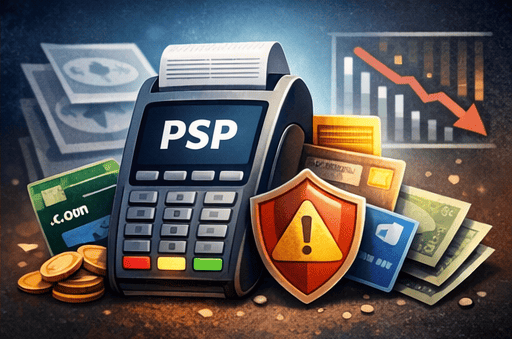
3) Payments are the main risk node: why “connect a PSP and forget” fails

Payments and PSP for unlicensed casinos

In 2026, the payment layer is a living organism. Without redundancy and monitoring, everything can look fine at noon and collapse in the evening with a deposit drop and a wave of complaints.

  • Backup routes are mandatory: one channel goes down — the second takes over without panic.
  • Telemetry is mandatory: approval, decline, avg deposit, payout speed — tracked daily.
  • Risk rules are mandatory: limits by amount/frequency, clear workflows for edge cases.
  • Player communication matters: clear statuses for deposits/payouts instead of silence.

A strong project is not “never having issues”, but not dying from issues in one day.

4) Domains, infrastructure, and “brand survivability”

Domains and infrastructure in 2026

When the project is unlicensed, infrastructure becomes strategy. Domain or hosting vulnerability turns into direct financial risk: today you buy traffic, tomorrow your entry point is gone.

  • Block contingency plan: mirrors, routing, prebuilt landers ready to switch.
  • Reliable technical base: stability under load beats “fancy visuals”.
  • Separate content from logic: moving the front-end becomes easier without breaking the product.
  • Avoid single-channel dependency: one acquisition source = one point of failure.

5) Bonuses & retention: where teams dig their own grave

Bonuses and retention for online casinos

The classic mistake is trying to “win with bonuses”. In 2026 it often backfires: you attract users who came to farm promos, and your economics crack. Surviving projects build promotions around segmentation and LTV targets.

  • Segmentation: different offers for new, active, dormant, and VIP users — otherwise budget leaks.
  • Triggers: return flows, reactivation, VIP events, personalized offers.
  • Bonus load control: restrictions, audits, protection against abuse.
  • Clear metrics: how promos affect repeat deposits and margin, not “feels better”.

6) Checkpoints for days 7/14/30/60/120 — what to track to stay alive

Launch checkpoints for unlicensed casinos

Survival is routine control. Without it, the project dies quietly: money bleeds, problems accumulate, and one day the numbers stop matching. Here’s a simple control map.

  • Day 7: platform stability, reg → deposit conversion, the first funnel blockers.
  • Day 14: traffic quality, anti-fraud, payment approval, initial segmentation.
  • Day 30: D7/D14 retention, repeat deposits, bonus load, support pressure/complaints.
  • Day 60: LTV by source, ROI picture, payment route stability, VIP logic.
  • Day 120: channel scaling, mature analytics, forecasting, economy optimization.

In 2026, an “unlicensed casino” survives not by luck, but by architecture: payment and infrastructure redundancy, transparent analytics, financial discipline, and strong retention. Most shutdowns are not “external bans”, but internal chaos — no numbers, no risk control, and decisions made by gut feeling.

If you’re building a project and want to reduce the probability of dying in the first months, start with the right foundation: platform, back office, a payment setup with backups, anti-fraud, and retention tooling. SoftIGaming helps you build a controllable system, not just a “slots website”. You can contact us on Telegram — we’ll review a few scenarios for your case.